
Campaign
JERA
Japan’s biggest fossil fuel power company is missing a huge opportunity in renewable energy
Japan’s biggest power company JERA could be the renewable energy company it claims to be.
- Fossil fuels comprised 97% of JERA’s global installed power generation capacity and nearly all domestic operations, while renewables represented only 3% globally and 0.2% in Japan as of FY2023
- Demand for renewable energy is set to grow massively in Asia. Energy think tank Ember found ASEAN energy demand set to increase 41% from 2023 levels. The International Energy Agency estimates that clean energy investment in Southeast Asia needs to quadruple to US$130 billion by 2030.
- JERA’s strategy for emissions reduction, ammonia or hydrogen co-firing, would not help Asia decarbonise, as co-firing is reportedly unlikely to reduce carbon emissions (Transition Zero, 2022)
- JERA has the potential to drive renewable energy growth in Asia, yet it’s currently prioritizing LNG expansion – it trades about 35 Mt of LNG per year (JERA would need to grow 2,534,828,681 trees every year for 10 years to contain this carbon, OR 33 thousand baseball fields worth of forests, see EPA)
JERA is missing a profitable opportunity in one of the world’s fastest-growing energy markets.
Take Action
Take action by sending an email to JERA’s CEOs!
Take action: Stop AI chatbots greenwashing JERA!
JERA is being labelled by artificial intelligence (AI) tools as a renewable energy company – why? Because AI is picking up JERA’s claims it’s a clean energy leader. However, only 3% of its power generation capacity is renewable, while a whopping 97% is fossil fuel based.
Help correct the record on JERA: Tell the big AI companies to get their facts right.
What is JERA?
JERA is a Japanese power company, with a global reach.
JERA is Japan’s largest power generation company with generation assets supplying approximately 30% of the country’s electricity. The company is a 50-50 joint venture of TEPCO and Chubu Electric Power. JERA is also a major power producer worldwide (with operations in the UK, India, Middle East, Taiwan, Vietnam, Bangladesh, Indonesia,Thailand and the Philippines) and a global LNG trader (10% of the world’s LNG).
How much renewable energy does JERA actually help produce?
Only 3% of JERA’s global energy generation capacity comes from renewables as of FY2023 (this is the latest data that is publicly shared, even in their 2025 investor report/presentations).
JERA has set a target of 5 GW of renewable capacity by end FY2025, and 20 GW by 2035.
Within JERA’s operations in Japan, renewables make up just 0.2% of capacity.
Renewables account for only ~30% of international project capacity, with ~70% still fossil-based fuels.
JERA needs to invest in more renewable energy projects to meet its own renewable energy commitment.
What is JERA’s carbon footprint? (How much CO2 does it emit?)
JERA’s emissions come from its LNG trading business and its power generation business:
LNG trading: JERA trades 35 Mt of LNG per year (JERA would need to grow 2,534,828,681 trees every year for 10 years to contain this carbon, OR 33 thousand baseball fields worth of forests see EPA)
JERA plans to continue these volumes into 2035.
Notes: Combustion figures are based on 2006 IPCC Emissions Factor of 56100kgtCO₂/TJ of gas, modified for tonnes of LNG.
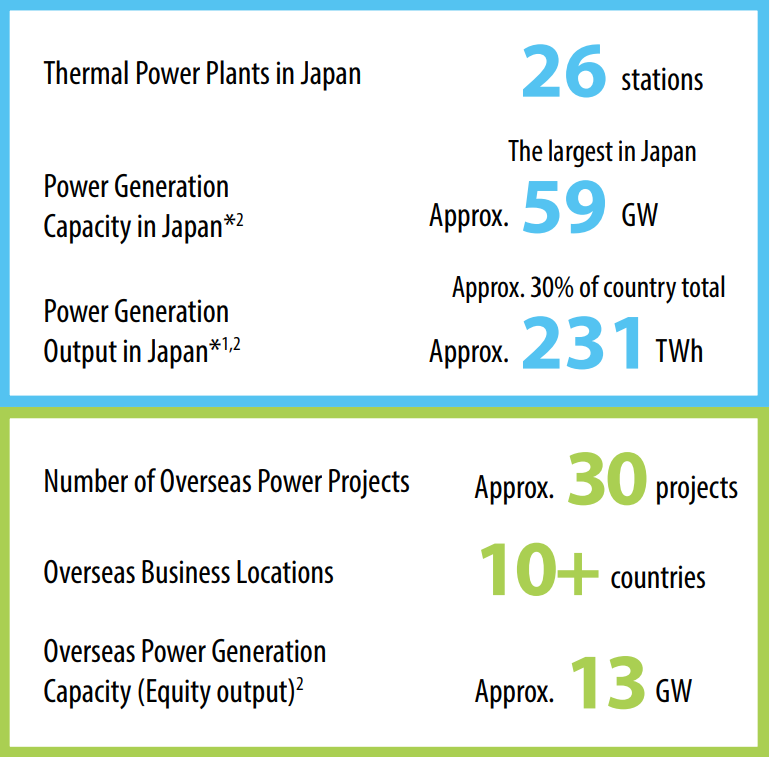
(JERA integrated report 2024, p.3).
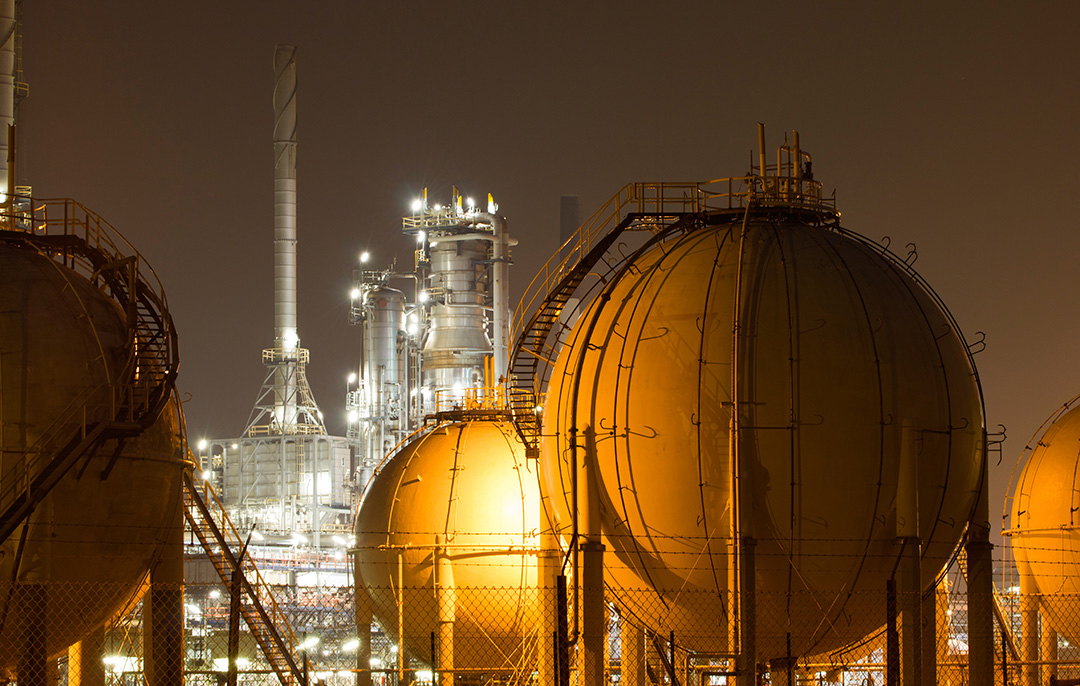
LNG is JERA’s main fuel type, accounting for 72.2% of global and 74.7% of domestic energy output in JERA’s portfolio. JERA views LNG as lower emissions intensive than coal, although there are studies which dispute this claim.
How is JERA expanding fossil fuels in Bangladesh?
JERA has expansion plans in Bangladesh, through its ownership in Summit Power International. In 2025, JERA opened an office in Bangladesh as JERA Bangladesh.
Summit Power is the sponsor of the proposed Matarbari Summit LNG Power Plant and Matarbari Summit LNG Terminal. Additionally, JERA is bidding on the Matarbari Onshore LNG Terminal and planning further multi billion dollar LNG expansion in Bangladesh.
Companies like JERA are pushing costly LNG on Bangladesh, exposing Bangladesh’s economy to the volatile prices of imported fuels. While these companies argue their LNG buildout contributes to a low carbon transition, in reality it holds Bangladesh hostage financially, while these companies profit from the buildout of more polluting power.

Photography by Auvro Alam. Copyright Market Forces.
Why do JERA’s emissions matter?
Globally, we have recognised the need to limit global warming. JERA itself has made a net zero by 2050 commitment, recognising the need to reduce its carbon emissions.
At 3°C climate impacts would be catastrophic:
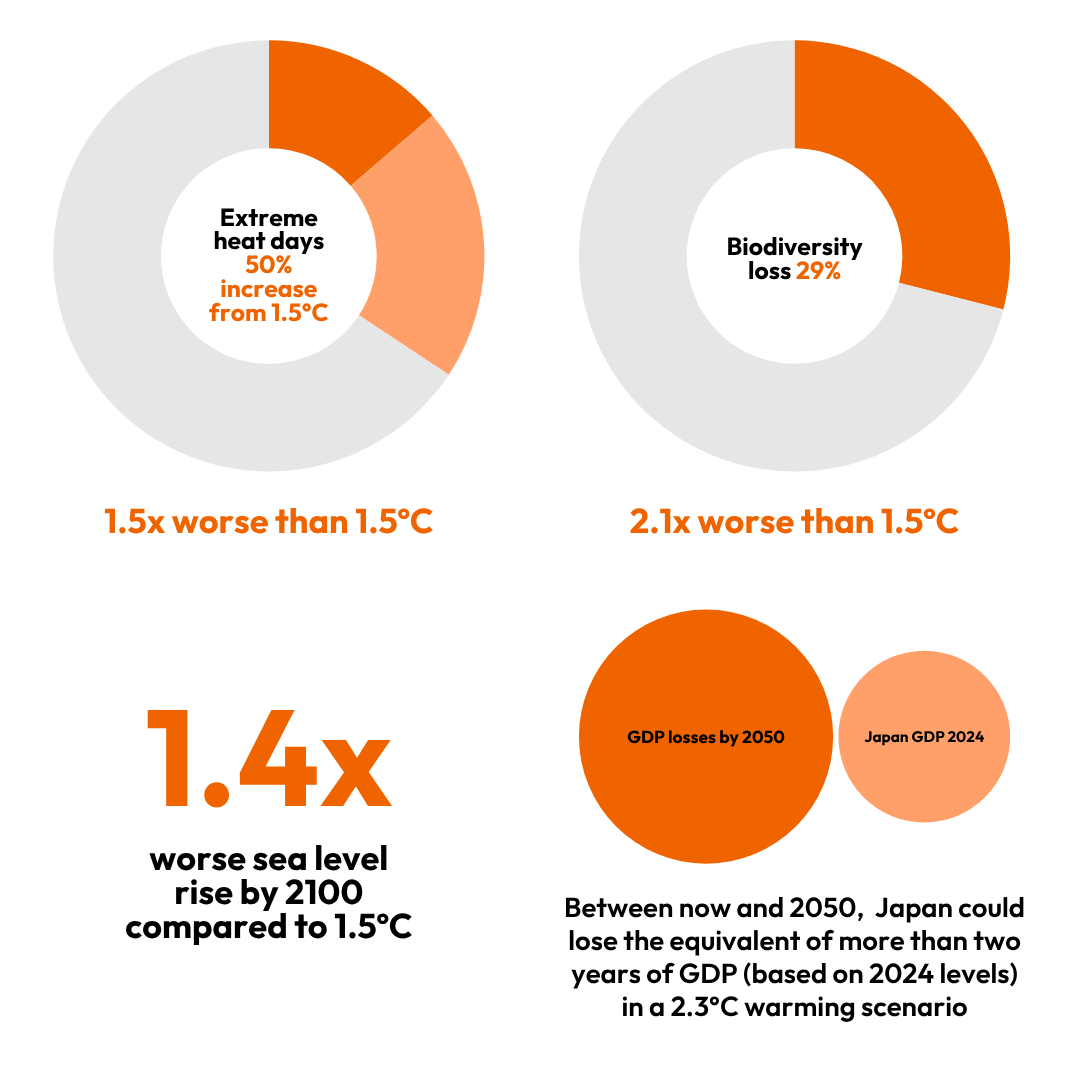
JERA’s own projects would be at risk:
JERA is Japan’s largest power generation company with generation assets supplying approximately 30% of the country’s electricity.
Many of these power plant assets are located on land projected to be below the annual flood level in 2050, presenting serious adaptation challenges and costs for the company in high warming scenarios.
JERA’s emission reduction plan:
JERA wants to achieve 60% reduction in CO2 emissions by 2035 and net zero emissions by 2050.
Would ammonia or hydrogen co-firing help Asia decarbonise?
JERA plans to phase out inefficient coal plants and convert to ammonia co-firing by 2040.
However, out of their 12 coal plants in Japan, only the Hekinan Power Station is considered to be using inefficient coal-powered generation.
This approach is riddled with problems, including doubtful emissions reduction potential to limit global warming to 1.5°C and lack of economic viability.
JERA is conducting a demonstration of 20% ammonia and 80% coal co-firing at its Hekinan thermal power station in Aichi, Japan.
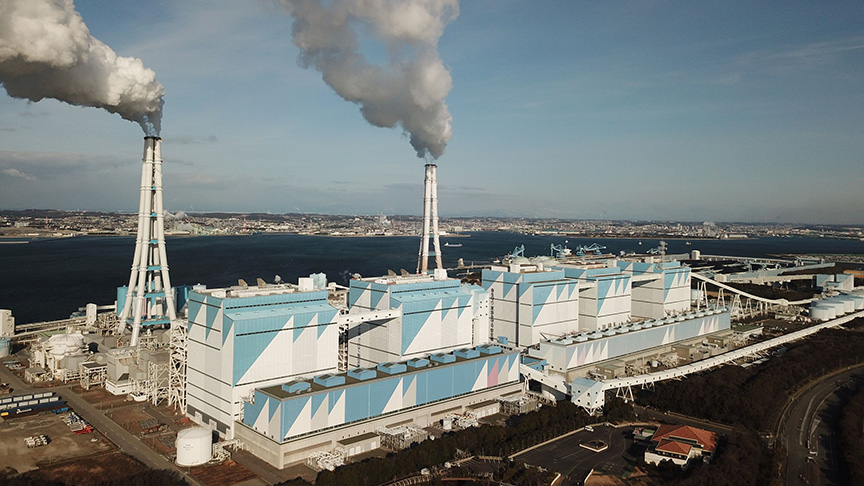
JERA’s Hekinan Power Station, which is being targeted for ammonia co-firing. Source: Wikimedia Commons
For the remaining reductions, JERA has assured investors that it can make its LNG business and its thermal (coal and gas) power stations carbon neutral through conversion to hydrogen and ammonia and the use of CCUS.
Research has found that blue hydrogen is more emissions intensive to produce than gas, particularly if it involves adding every emissions intensive step in the LNG value chain before it is converted into hydrogen. Abating blue hydrogen will rely almost entirely on CCUS, a technology not yet proven to work at scale and one that adds enormous production costs to reduce emissions.
What can JERA do to encourage the clean energy transition?
The ASEAN region needs at least $200 billion in annual energy investments by 2030 (World Economic Forum 2025).
JERA must assess each new overseas LNG project against renewable energy alternatives and its own commitments in order to meet the clean energy demand.
JERA must phase out its existing fossil fuel demand at a responsible pace with viable solutions, rather than with ammonia/hydrogen which would exacerbate the problem.
JERA can help shape Asia’s energy future for the better.
FAQs
1. Is JERA really transitioning to renewable energy?
Despite its claims, only 3% of JERA’s global energy generation capacity comes from renewables as of FY2023 — and just 0.2% in Japan. Fossil fuels still make up 97% of JERA’s operations.
2. What role does LNG play in JERA’s business?
LNG is JERA’s dominant fuel source, making up over 70% of its energy output. The company trades around 35 million tonnes annually and plans to maintain these volumes through 2035.
3. Why are JERA’s LNG projects in Asia controversial?
JERA’s LNG expansion in countries like Bangladesh increases financial risk and import dependency for local economies. It also delays a genuine transition to low-cost renewables.
4. Can hydrogen or ammonia co-firing reduce JERA’s emissions?
Not effectively. Current plans rely on technologies like ammonia co-firing and CCUS, which face economic and technical limitations, and may not meaningfully reduce emissions at the scale required.
5. What are the risks of JERA’s current strategy?
By prioritizing fossil fuels, JERA risks missing out on Asia’s booming clean energy market. Its infrastructure may also face rising climate adaptation costs, especially under high-warming scenarios.
Campaign news
Join us
Subscribe for email updates: be part of the movement taking action to protect our climate.