
2025 AGM result: 35.2% in favour of climate resolution
- The first ever climate-related shareholder resolution at Macquarie, filed by Market Forces, received significant support from shareholders with a huge 35% of shareholder votes in favour. The resolution called on Macquarie to align its fossil fuel finance with its climate commitments.
- This is the largest ever display of shareholder support for a climate resolution at a major Australian bank.
- Macquarie’s support for one of Australia’s biggest new gas fracking developments, the Northern Territory’s Beetaloo Basin, was a major topic and came under fierce scrutiny leading into and at the AGM.
- The board was presented with an open letter with over 10,000 signatures calling on the bank to provide no further funding to the companies seeking to frack the Beetaloo.
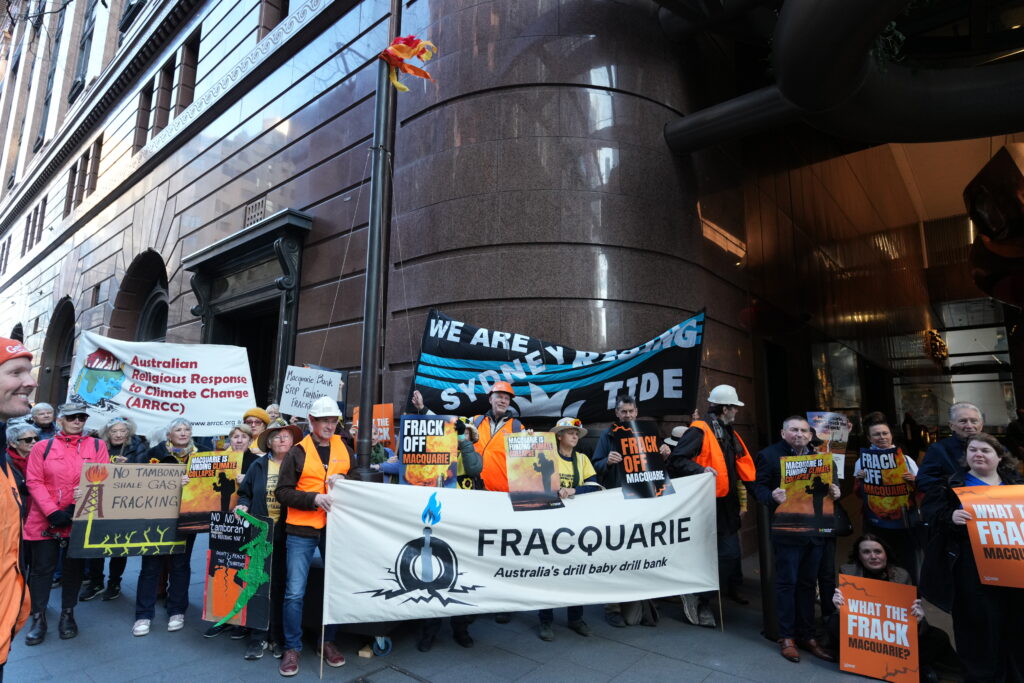
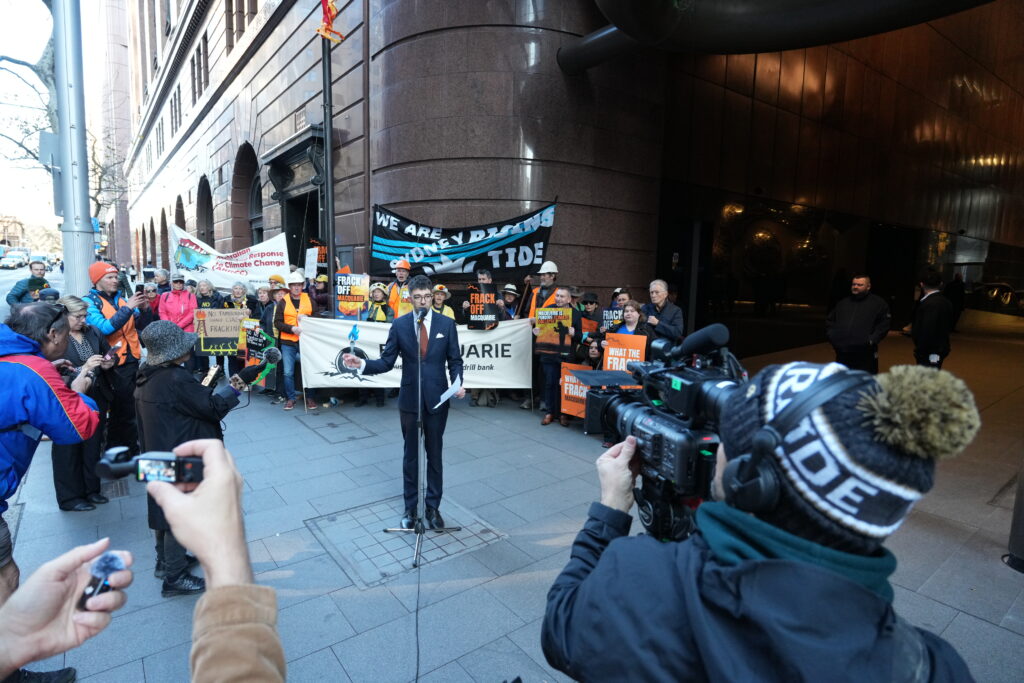
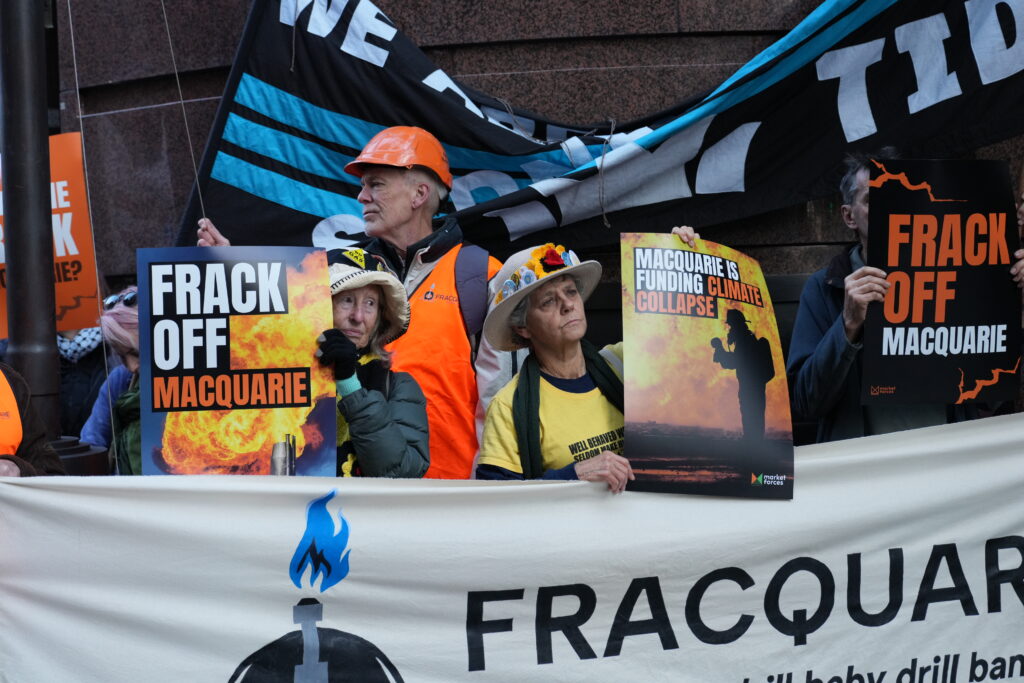
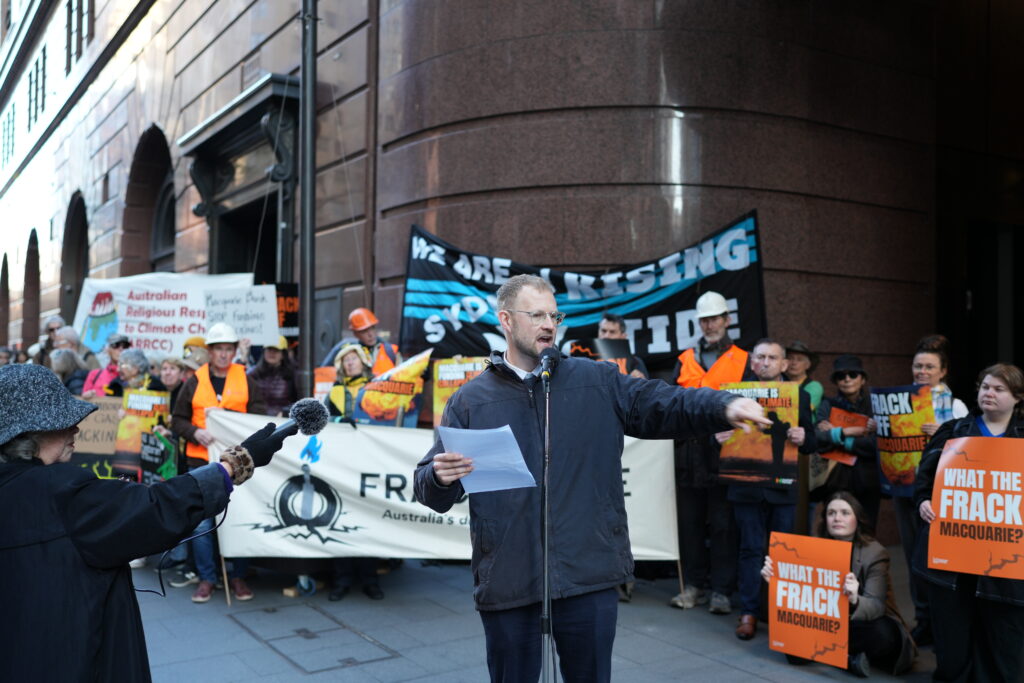
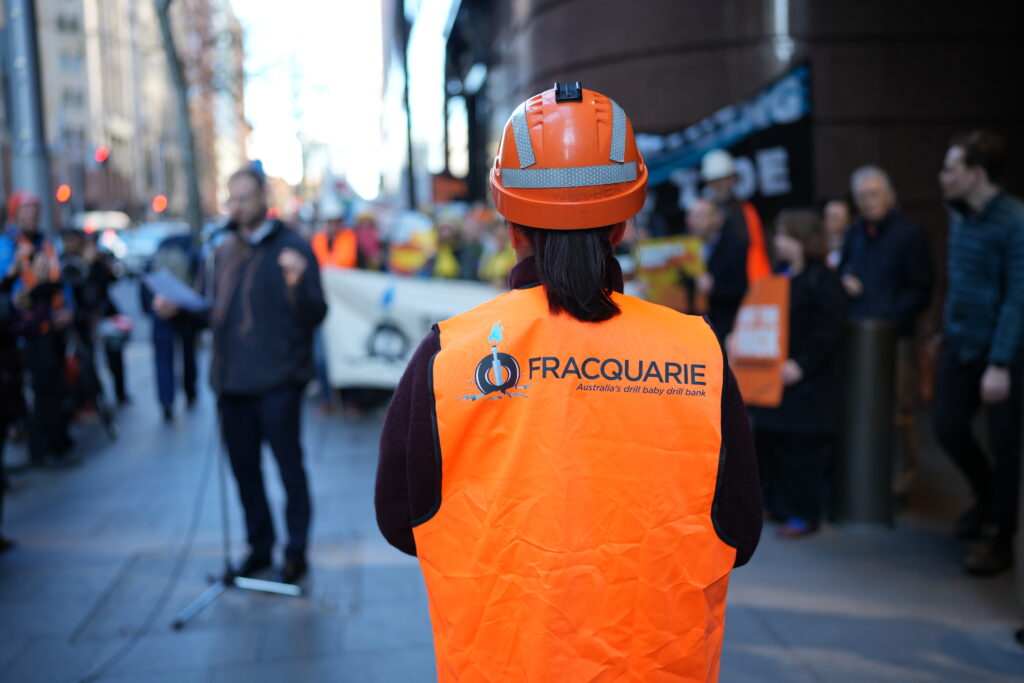
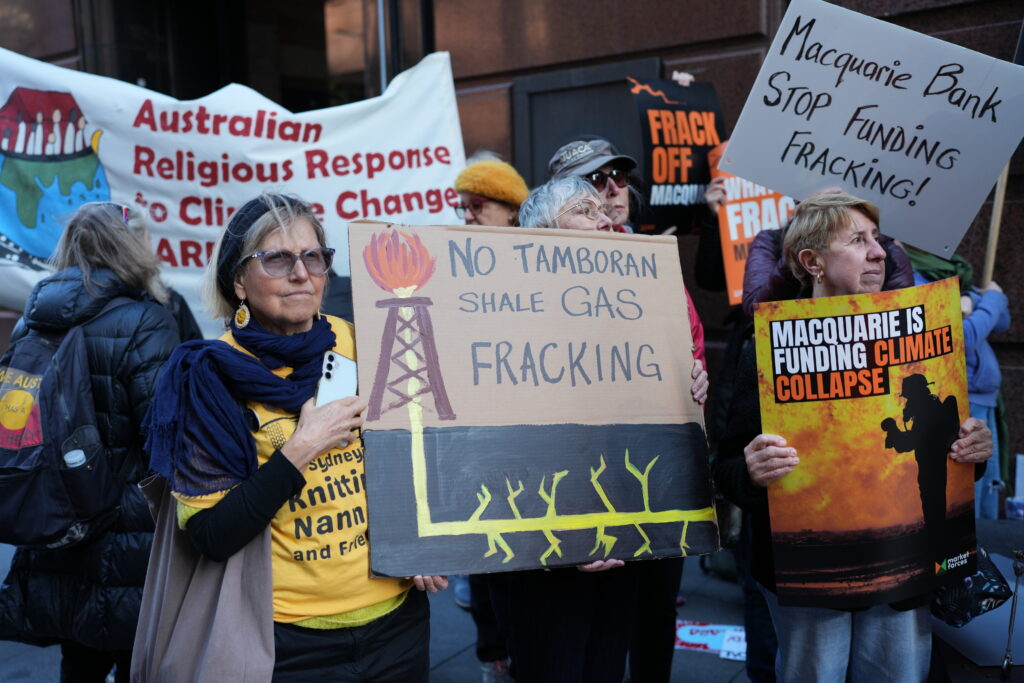
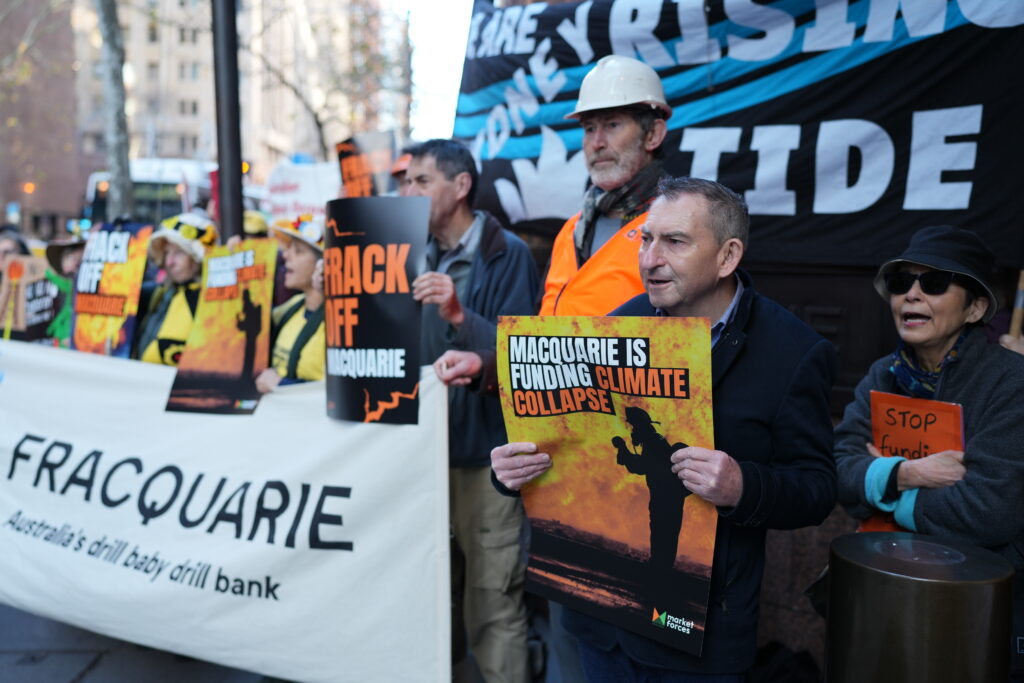
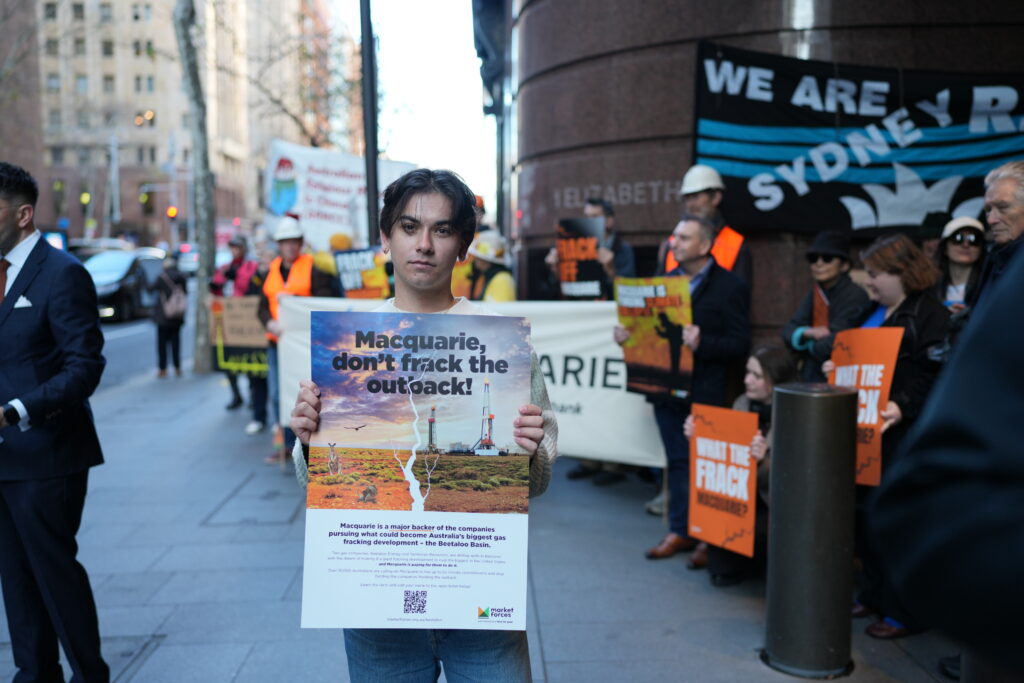
- Fed-up members of the community rallied out the front of the AGM and made sure their voices were heard by Macquarie’s board.
- Macquarie faces further outrage if it continues contravening its net zero commitments by supporting fossil fuel expansion.
Take action!
Tell Macquarie’s CEO and Chair to listen to shareholders and stop funding dangerous fossil fuel expansion!
Shareholder resolution – Macquarie receives first strike on climate
It wasn’t a great day for Macquarie. Its first major blow was a first-ever ‘strike’ against its Remuneration Report (pay for executives and directors), with 25.4% of shareholder votes going against it due largely to a string of recent regulatory failings.
Its performance on climate was then dealt an even bigger blow, with over 35% of shareholders effectively telling Macquarie it’s nowhere near delivering on its supposed commitments to net zero and the Paris Agreement.
It’s not exactly surprising. This is a bank that lags its big four Australian competitors on every meaningful fossil fuel policy metric. Macquarie’s climate failures include:
- Still funding new oil and gas extraction projects (while ANZ, CommBank, NAB and Westpac have all ruled this out).
- No requirement for fossil fuel clients to have a climate transition plan.
- Massively increasing oil and gas funding – 140% in just the last two years.
- Walking back its previous ban on funding new metallurgical coal mines.
- Being the only Australian bank to have left the Net-Zero Banking Alliance, joining some of the world’s biggest fossil fuel banks in doing so.
It was reported that Macquarie was scrambling to address shareholders’ concerns about its executive and director pay packages before the AGM, once it became apparent it was looking down the barrel of an embarrassing first strike.
But the climate vote was substantially bigger than the remuneration strike. In fact, it was the biggest vote against a bank on climate grounds in Australia’s history. If Macquarie’s board is serious about delivering on its net zero commitments then it should treat this rebuke of its management of climate risk with the same sense of urgency it gave to its remuneration strike. The heat is on – Macquarie has been warned.
Community out in force
Outside Macquarie’s Sydney CBD head office, the community turned out in force to protest Macquarie’s backing of the Beetaloo Basin.
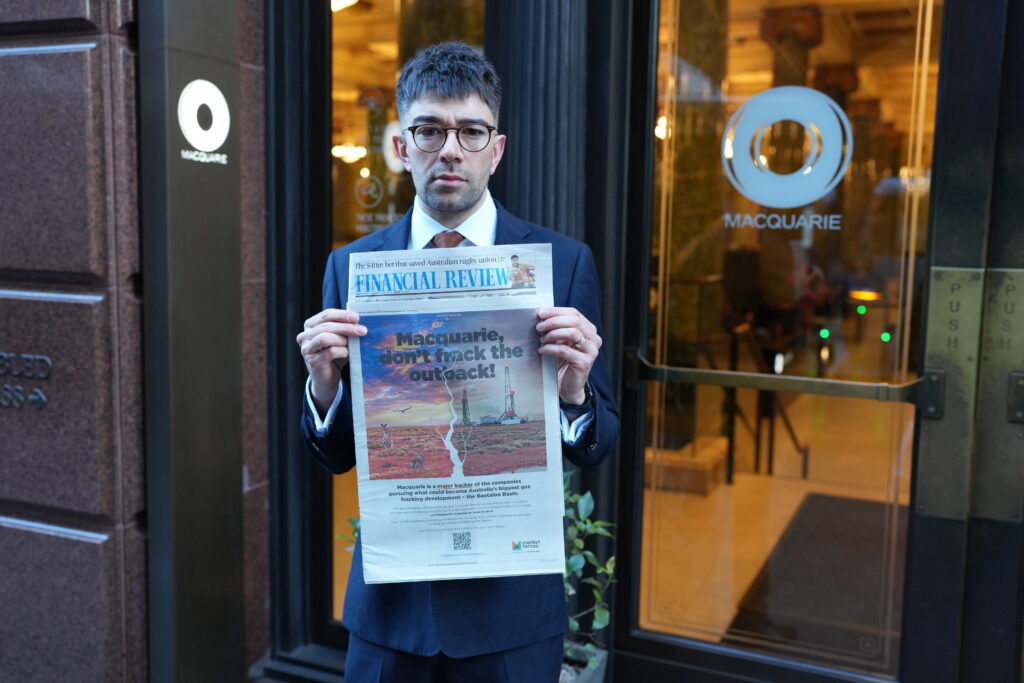
Market Forces also booked a full-page ad in the Australian Financial Review calling on Macquarie not to provide any further funding to companies seeking to frack the outback.
Heat on Macquarie’s backing of Beetaloo fracking
Macquarie is a major financial backer of what could be Australia’s biggest new gas fracking development, the Northern Territory’s Beetaloo Basin. The gas companies currently exploring and developing the Basin are Macquarie’s clients – Beetaloo Energy (formerly Empire Energy) and Tamboran Resources.
Both Beetaloo Energy and Tamboran Resources’ sole near-term focus is developing one of Australia’s biggest carbon bombs. If developed to the scale these gas companies intend, Beetaloo would operate until almost 2070 and produce an estimated 1.1 billion tonnes of CO2-equivalent emissions, equal to Australia’s largest coal plant, Eraring, operating for more than 83 years. It’s also enough to wipe out more than 450 years of emissions savings from the renewables projects Macquarie provided green finance for last year.
- Macquarie is a shareholder of Beetaloo Energy and has been financing the company for the past 15 years. In November 2024, Macquarie pulled together a $65 million financing package explicitly for its gas fracking operations in the Beetaloo Basin. Its CEO recently said that Macquarie is the “predominant financier of oil and gas projects in the Northern Territory” and “Macquarie has been with us through thick and thin, and they continue to do so…their support has been critical.”
- Macquarie also provided a $35 million loan to Tamboran Resources to “support [Tamboran’s] ongoing development activities”, all of which are focused on exploiting Beetaloo gas.
Does that sound like the behaviour of a financial institution committed to the goals of the Paris Agreement and net zero by 2050?
Ahead of the AGM, over 10,000 people, including scientists, community members and customers of Macquarie signed an open letter calling on the bank not to provide any further funding to the companies seeking to frack the outback.
The open letter was presented to the board in the AGM by Market Forces Policy Analyst and Campaigner, Morgan Pickett. Mr. Pickett asked the board if Macquarie would commit to no longer funding companies developing the highly controversial Beetaloo Basin.
What followed was an astounding exchange. Macquarie chair Glenn Stevens’ response was a simple ‘no’, remarkable from the chair of a Group with public commitments to net zero and Paris. In an even more astonishing admission, the chair remarked that Macquarie hadn’t been assessing the companies’ transition plans because they aren’t yet producing gas from the Beetaloo Basin, despite this being their sole business intention.
Mr. Pickett observed that it makes no sense at all to not assess the intended future gas production of these companies for Paris-alignment when that is exactly what Macquarie is financing now. The chair’s only answer to that was that it does make sense to Macquarie and that committing to no longer funding companies developing the Beetaloo Basin would be “contrary to the interests of shareholders in the company (Macquarie).”
Macquarie is one of the world’s largest infrastructure asset managers and therefore is acutely exposed to the physical risks from climate change at high levels of warming. By financing fossil fuel expansion, which is incompatible with limiting warming in line with the Paris Agreement’s goals, Macquarie is shooting itself in the foot. It’s unclear how that is in the best interests of shareholders.
This exchange typifies the indifference to the severely harmful emissions impact of the Beetaloo Basin development that exists at Macquarie.
Supposedly committed to Paris but can’t accept the climate science
Step one in making a commitment to the goals of the Paris Agreement is accepting the latest and best available climate science. Step two is actually delivering on those commitments by following the scientific advice.
Macquarie’s board said in its Notice of Meeting “the science on our changing climate is clear and unequivocal”, also stating in sustainability materials that it acknowledges the conclusions of the Intergovernmental Panel on Climate Change (IPCC) that its commitment to net zero emissions by 2050 needs to also be consistent with a 1.5°C warming limit.
The IPCC concluded years ago that the lifetime emissions from existing fossil fuel infrastructure would significantly exceed the carbon budget remaining for 1.5°C. When you add the emissions from ‘planned’ fossil fuel infrastructure the remaining budget for 2°C is almost blown, along with the goals of the Paris Agreement.
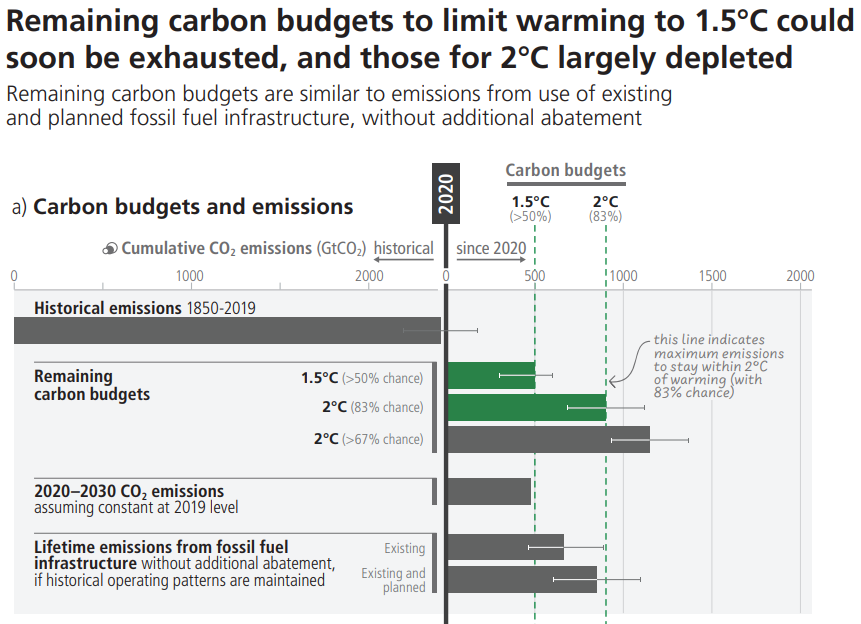
These conclusions were put to the board by Market Forces’ Head of Research Kyle Robertson on behalf of renowned climate change scientist and a lead author of past IPCC reports, Professor Lesley Hughes.
Macquarie chair Glenn Stevens did not give a straight answer, deflecting at every opportunity. What you can draw from this exchange is that Macquarie is unlikely to publicly acknowledge the conclusions of the world’s leading climate science body, because doing so would require admitting that its financing of giant new gas projects like Beetaloo is not even close to being aligned with its climate commitments.
The significant shareholder censure of Macquarie’s current approach to financing fossil fuel expansion should give the board cause for reflection. It will no doubt be seeking to avoid embarrassing votes against its climate performance in future years.